
Ramses in Review
OR "Don’t even get me started on the overpriced stale cake and sandwiches."

I’ve been thinking a lot about history lately, about how we re-create or re-present the past, and what it tells us about the present.
Perhaps that’s why I decided to take a trip to the Australian Museum on one of the last days of the mega touring exhibition Ramses & the Gold of the Pharaohs and sign up for the whole shebang, the $54 ticket, the $30 VR experience and the $11 audio tour.
The Ramses exhibition is a high production value affair, there’s dramatic lighting and staging, vast murals and numerous sound and video embellishments. The museum calls it an “all-new multisensory museum experience” providing visitors with “a window into the life and accomplishments of Ramses II, more commonly known as Ramses the Great.”
For me, it was hard to see the wood for the trees. There were some incredible artefacts for sure, but I found it hard to pay attention to them between the videos and installations… and the crowds.
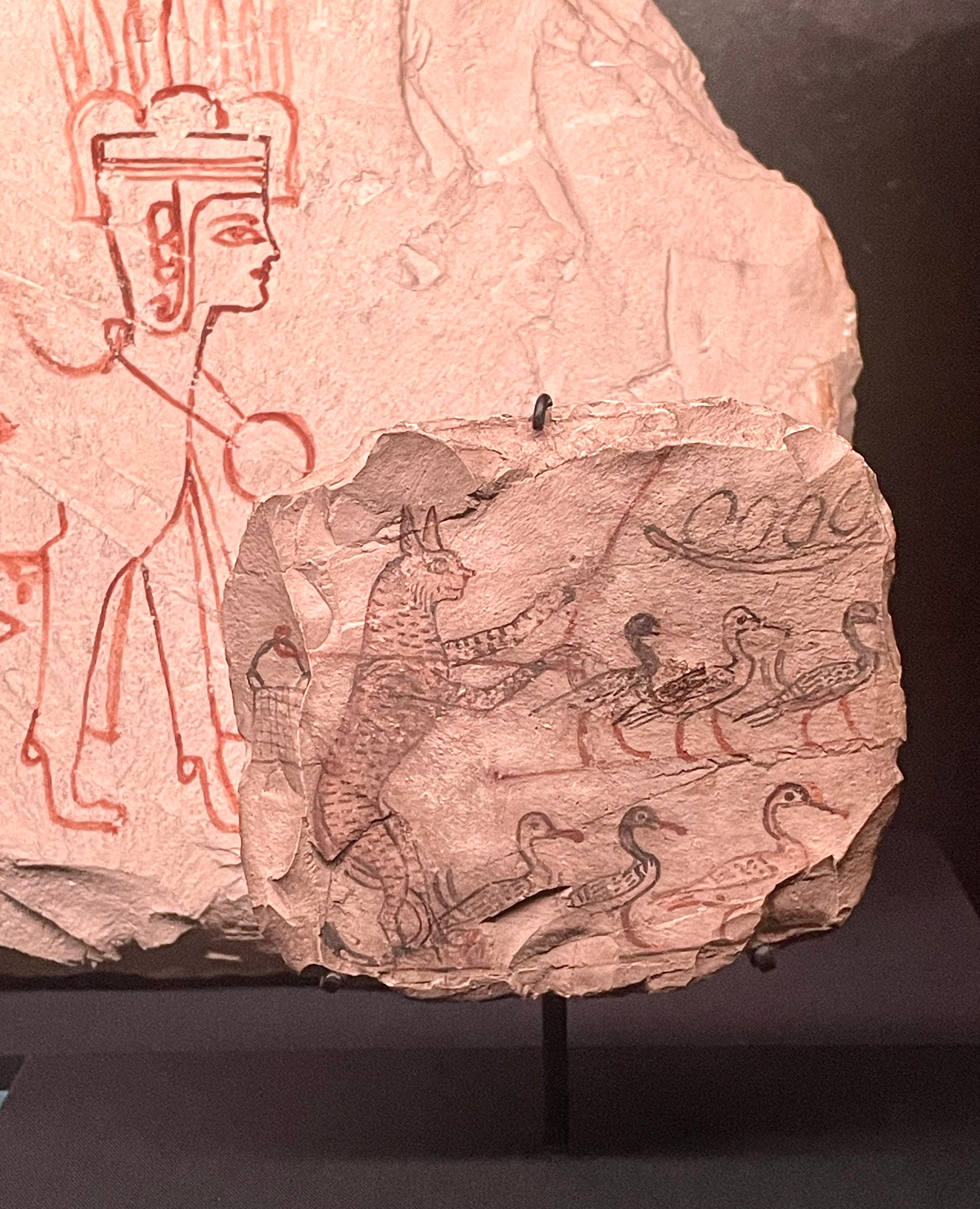
The exhibition starts by introducing Ramses II, who sounds like the Donald Trump of ancient Egypt. He claimed he was a God, he propagated ‘fake news’ about himself, claiming he’d won things he actually hadn’t (the battle of Kadesh for instance - which is thought to have been a draw at best). His ‘greatness’ was matched by the size of his ego and his monuments.
The Australian Museum says “Ramses was known as a mighty warrior who secured peace with his neighbours, led an extensive building campaign that included scores of gigantic monuments to himself, and is believed to have fathered over 100 children.”
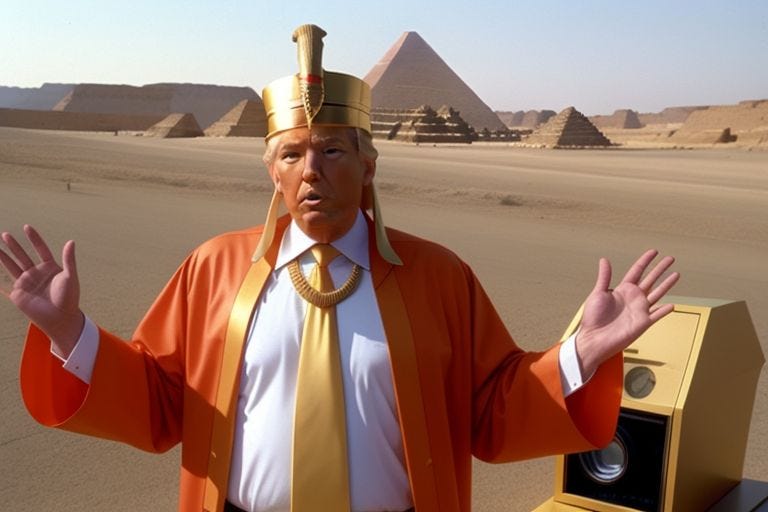
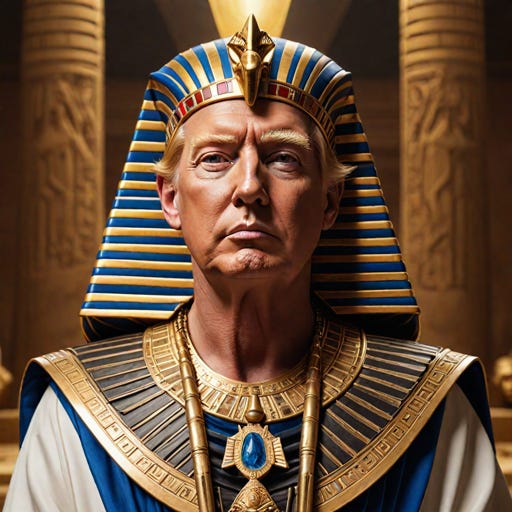
I imagined what it might look like, thousands of years from now, if crowds thronged some museum of the future to consider the achievements of Trump, his shiny towers, the golden relics of his fake tan and blonde hair, his proclamations of greatness.
Interestingly, the exhibition’s curator Dr Zahi Hawass is also something of a show pony. An article in the Guardian quotes him as saying,
“My name is well known all over the world … They’re looking at the Opera House because they need a big venue for my lecture.”
The Guardian article also quotes him as saying, “God gave me this charisma, he did not give it to anyone else,” to Smithsonian Magazine in 2013, when journalist Joshua Hammer repeated his rivals’ claims that his fame is attributable more to self-promotion and political connections than scientific clout.
So, why did I find the whole thing unedifying? It’s hard to say if it was the crowds, the exhibition design or the glorification of ego that made me feel underwhelmed.
Most of the one star reviews on Tripadvisor relate to the overcrowding or exhibition design, though a few related to the cafe.
Rameses Gold of the Pharoahs. Pathetic given the price. The Abu Simble model was laughable, with the illumination not seen when you pushed the poxy button. The exhibition was not inspiring at all, and the number of Ramses related artefacts ( ex sarcophagus) was minimal. Having been to Egypt 30 years ago, my ticket was a waste of money. I don't recommend it.
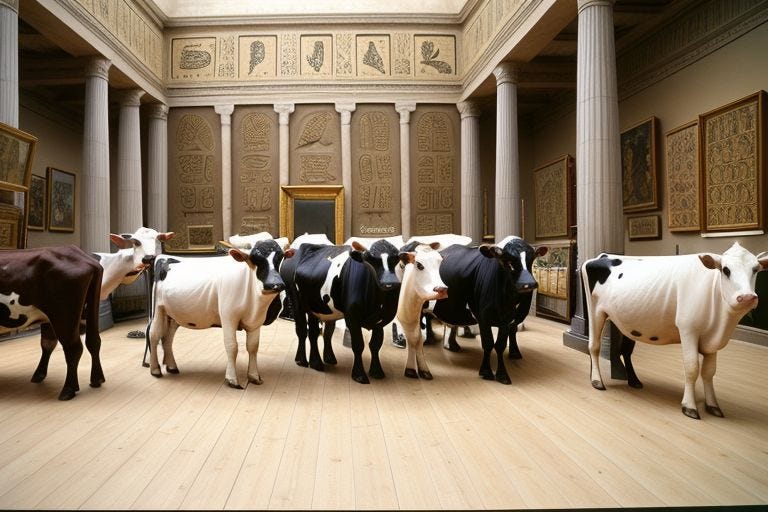
the part that upset me was the lady that worked there was screaming a everyone like we were a herd of cows telling everyone to move and go to the left when there was absolutely nowhere for us to move due to how packed it was. What should have been an enjoyable day was turned into a nightmare . Don’t even get me started on the overpriced stale cake and sandwiches.
I lasted about an hour and a half in the exhibition. I learned that women were painted a different colour (more yellow - less brown) to men in the artworks of ancient Egypt to indicate their tendency to stay inside on home duties.
I also learned that the animal mummies weren’t always about honouring the animals. Often the animal mummies were sold as sacrifices to the gods. You could pop down to your local mummifier and get yourself a couple of cats and an ibis, for instance, or bigger animals to offer up if you had the cash. In fact, animals were raised for this purpose. I hope, for the animals’ sake, that the mummifiers were gaming the system and selling ersatz ‘mummies’ rather than the real thing.
After the exhibition, I lined up for the Virtual Reality experience, ricocheting from ancient Egypt back to Sydney and the wonders of the modern world.
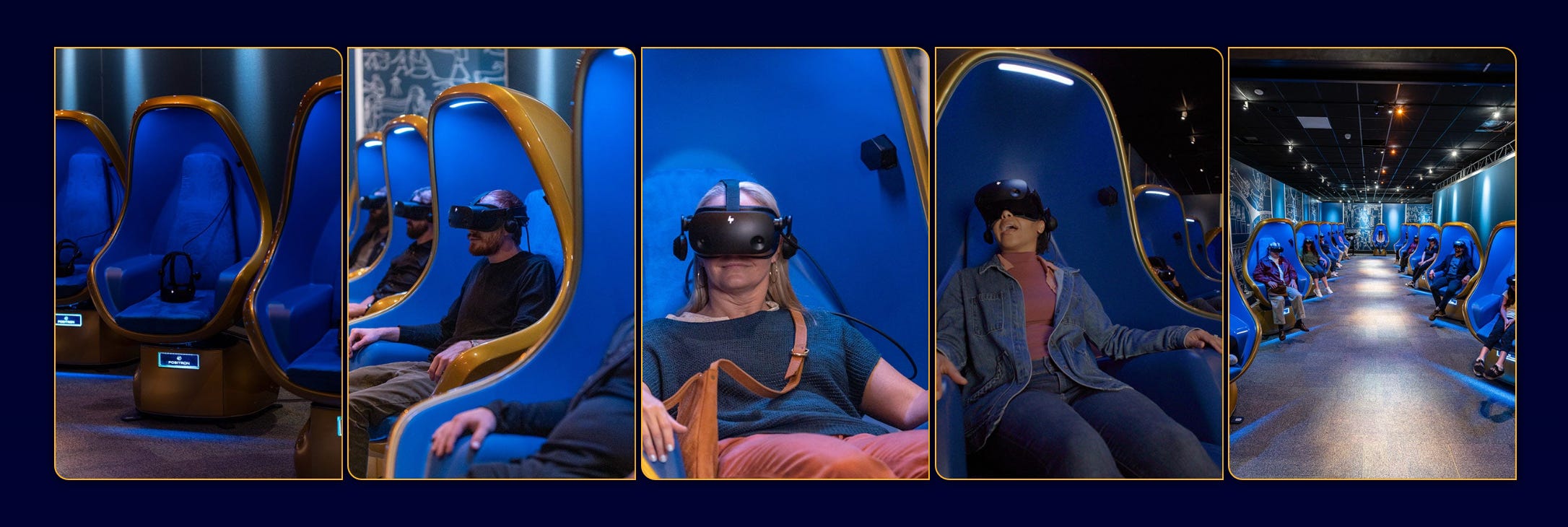
The ‘experience’ takes you on a guided tour through Abu Simbel temple and Nefertari’s Tomb led by Queen Nefertari herself. Nerfertari (Ramses II’s first wife) hovers in front of you leading the way and narrating the VR journey. The chairs you are sitting in swivel and shake as you travel through temples and desert, escaping spirits and dust storms.
I can’t say much about the tour of the temples because I couldn’t take my eyes off the queen’s boobs. Someone had put a lot of thought … time … inflation … into them.
World Heritage Exhibitions; GIF by Meara Isenberg/CNET
I had a lot of questions.
Were those boobs historically accurate?
They defied gravity, yet seemed to obey physics horizontally, swinging sideways and rebounding as she spun around.
Do boobs actually swing sideways?
What would Queen Nefertari’s body actually have been that curvy?
Who decided to give her such big boobs?
The Australian Museum and the exhibition team admits to a preference for ‘entertainment value’ over historical fidelity in the VR presentation.
I’m guessing the team at NEON, the company who created the whole exhibition experience and whose management team comprises 11 men and one woman, were behind the boob decision. Someone had to sign off on it, right? Perhaps someone who used to work on video game design or has spent too much time on OnlyFans created the initial prototype and nobody thought it strange??
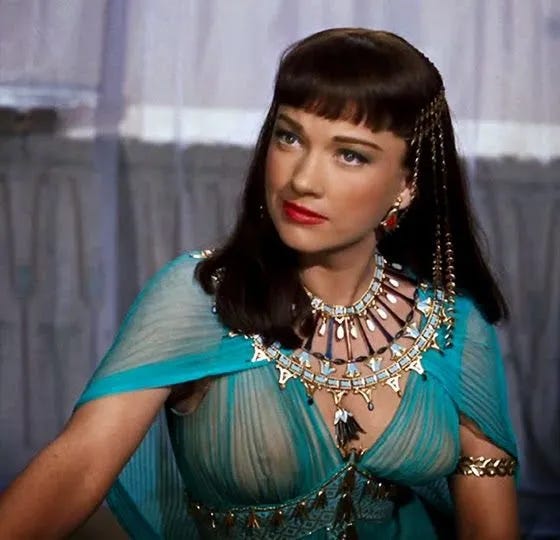
Or perhaps I’ve got it wrong. Perhaps boobs were big back then in ancient Egypt. After all, they featured quite proudly in Anne Baxter’s portrayal of Queen Nefertari.
Towards the end of the VR, the Queen finds Ramses II in a temple and gives him a hug. He looks more like Rambo than what I imagined Ramses might have looked like. He’s slick, hairless and bulging, like he’s come home from a workout out at the local gym.
Would a pharaoh really be that buff?
Would he do physical work, or get his slaves to?
So many questions…
After the VR experience I had to say something to someone. I needed someone to bear witness, so I turned to the woman in the chair next to me and said,
“I didn’t realise they had fake boobs in ancient Egypt.” She nodded and laughed.
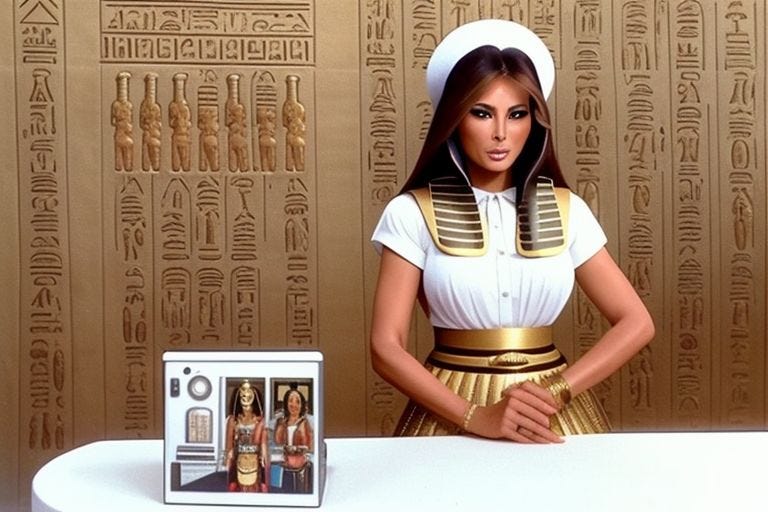
All these boobs led me thinking about an ABC story I’d seen about generative AI and how it’s shaping our understanding of bodies, particularly women’s bodies.
The story centres on model agent Chelsea Bonner, who has been speaking out about the dangers of generative AI replacing real models, not only decimating an industry but creating less and less inclusive or realistic images of women.
What we do about all this pornifying?
Keep calling it out I guess.
Hands off our bodies men (unless you are invited).
Bron you had me giggling on the train, smirking like amad woman.
You should do stand up comedy.i loved it.😍
Great! read Bron, I loved it, smart & funny 👏🤩